ServicesVinyl Composition Tile
Vinyl Composition Tile in Bellaire
VCT is the hard-wearing tile you see in schools, and it works just as well in a laundry room, mudroom or converted garage. We flatten the subfloor, spread adhesive to the right trowel notch, set tight seams and roll every tile so it bonds instead of curling.
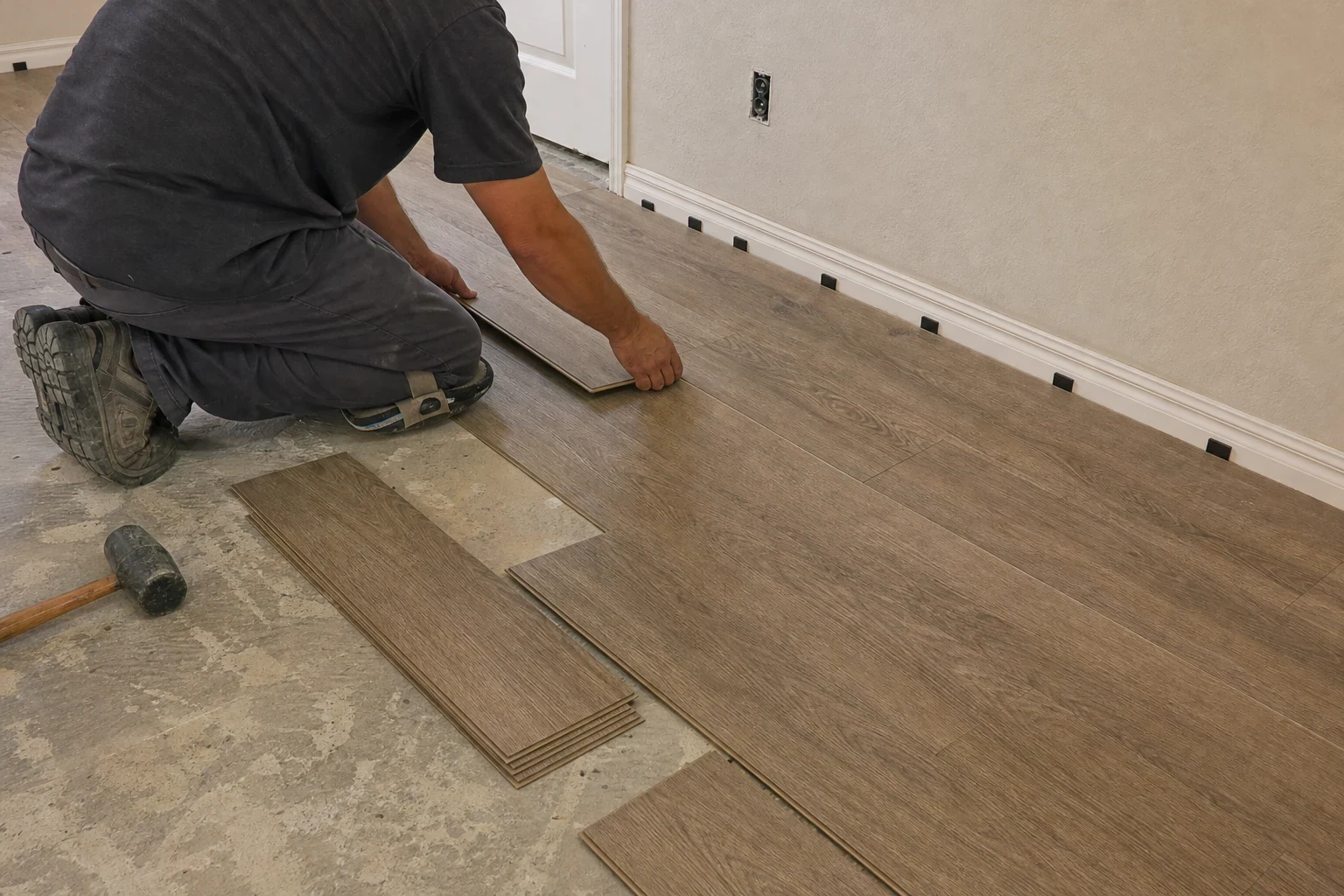
What VCT Is and When It Makes Sense
Vinyl composition tile is a 1/8-inch tile made mostly of limestone filler bound with vinyl resin. It is rigid, inexpensive per square foot and very hard to wear through, because the color runs through the full thickness. Scuffs sit on the surface finish, not in the pattern.
It is the right call for rooms that take abuse: a laundry room, a back-entry mudroom, a hobby or workshop room, a kids' playroom, or a garage turned into living space. It is not the right call if you want a soft, quiet floor or no upkeep at all. VCT needs a floor finish to look its best, and we will tell you that up front. If you want something more water-resistant and lower maintenance, we will point you toward luxury vinyl tile instead.
Because VCT is thin and stiff, it shows everything underneath it. A trowel ridge, a nail head or a 1/16-inch dip in the slab will telegraph through within months. That is why most of our time on a VCT job goes into the floor you never see.
What Our VCT Installation Includes
- Subfloor flattening
- We grind high spots and fill low spots and cracks with a cement-based patch, then feather it smooth. VCT needs a flatter surface than carpet or plank flooring ever will.
- Moisture check on the slab
- Most homes around here sit on concrete slabs, and moisture coming up through the slab breaks down tile adhesive. We test before we spread anything and adjust the plan if readings run high.
- Correct adhesive and trowel
- We use a clear thin-spread VCT adhesive with a fine-notch trowel and let it flash to tack before setting tile. Setting tile into wet glue lets it squeeze up through the seams and keeps the bond soft.
- Layout from the center
- We snap center lines so cut tiles at opposite walls come out even, and we plan any color pattern or border on paper first.
- Rolling and trim
- Every section is rolled with a heavy floor roller to seat the tile into the adhesive. We scribe tiles around door casings and finish edges with base or transition strips.
- First finish coats
- Factory finish on VCT is thin. We apply initial coats of floor finish after the adhesive sets so the tile starts life protected.
Signs a VCT Floor Is Due
Tiles popping loose
Corners lifting or tiles that click underfoot usually mean the adhesive failed, often from slab moisture or glue that was never rolled in.
Open or gapped seams
Gaps that collect dirt let water reach the adhesive and the next tile over. The problem spreads row by row.
Ridges showing through
Lines or bumps in the surface are trowel marks, cracks or debris left under the old tile. They wear through the finish first.
An old 9-inch tile floor
Older 9x9 tile and black adhesive can contain asbestos. If we see it, we stop and recommend having it tested by a qualified abatement contractor before anything is removed or ground.
A room changing use
Turning a garage or storage room into a playroom or gym is a good time to put down a durable, easy-to-patch floor.
How a VCT Job Runs
- 1
Talk it through, then measure
We go over the room, how it gets used and what is down there today. Then we check flatness, moisture and the old material in person before giving you a written estimate.
- 2
Remove and prepare
We pull the old flooring and base, scrape residue, then grind and patch until a straightedge sits flat. Furniture is moved and doorways are covered to keep dust in the room.
- 3
Spread, flash and set
Adhesive goes down in workable sections and is left to tack. We set tiles tight, alternating grain direction if you choose a quarter-turn look, and roll as we go.
- 4
Finish and hand back
Once the adhesive cures, we clean the floor and apply finish coats. We walk the room with you, explain how long to wait before heavy furniture and leave the area swept.
What Moves the Price of VCT
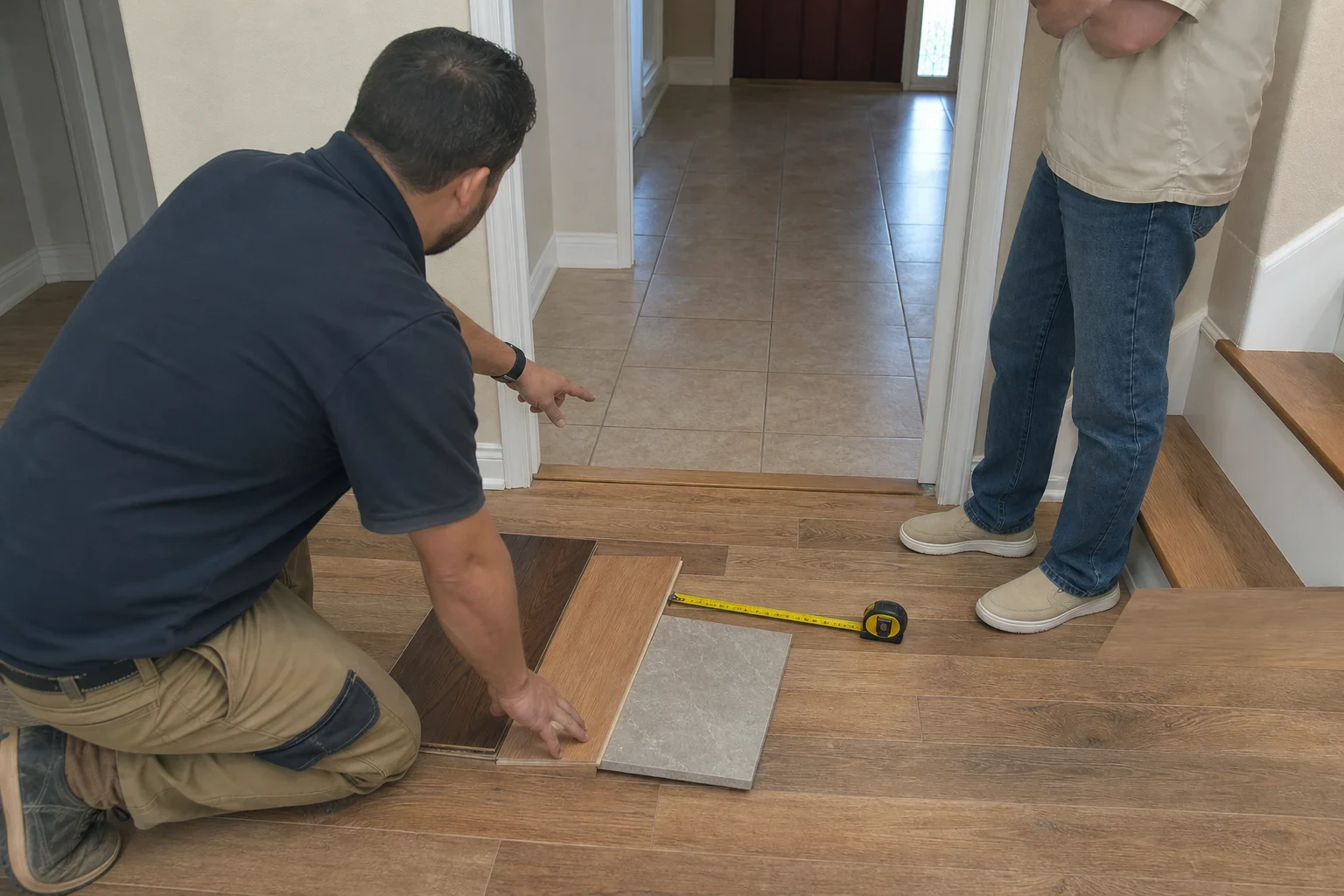
The tile itself is one of the least expensive parts of a VCT job. Labor, and especially preparation, is where the price moves. Your written estimate breaks out each of these so nothing shows up later.
- Condition of the slab
- A flat, clean slab needs little work. Cracks, old adhesive and dips can mean hours of grinding and patching.
- What comes up first
- Pulling carpet is quick. Removing glued-down tile takes longer, and suspected asbestos material requires testing and a separate abatement contractor.
- Pattern and cuts
- A single color laid in one direction goes fastest. Checkerboards, borders and many door openings add layout and cutting time.
- Moisture mitigation
- If the slab tests wet, a moisture-tolerant adhesive or a barrier coating adds material and cure time.
VCT Questions We Hear
Something not covered here? (346) 447-3257
Is VCT waterproof?
The tile resists water, but the seams do not. Standing water can work down between tiles to the adhesive. A good finish coat helps, and in a room with frequent spills we may suggest luxury vinyl tile instead.
Why does VCT need a floor finish?
The factory coating wears off quickly under traffic. Finish coats protect the surface, give it a sheen and take the scuffs instead of the tile. We apply the first coats as part of the install.
Can you put VCT over my existing floor?
Sometimes, if the old floor is a single, well-bonded layer of sheet vinyl or tile and is flat. Anything soft, cushioned or loose has to come up, because VCT will crack or telegraph over it.
How soon can we use the room?
Light foot traffic is usually fine the same day after rolling. We ask you to wait before moving heavy appliances back so the adhesive can cure and tiles do not shift or dent.
Who stands behind the work?
Our company has been in business 25+ years, and we are insured. Every installation carries a 1-year workmanship warranty, so if a tile lifts or a seam opens because of how we set it, we come back and fix it.
Ready for a Floor That Stays Down
Give us the room size, how it gets used and what covers it today. From there we can explain the prep your slab likely needs and schedule a visit to measure and test it.