Bellaire, TX
Bellaire Flooring Installed With Attention to Every Seam
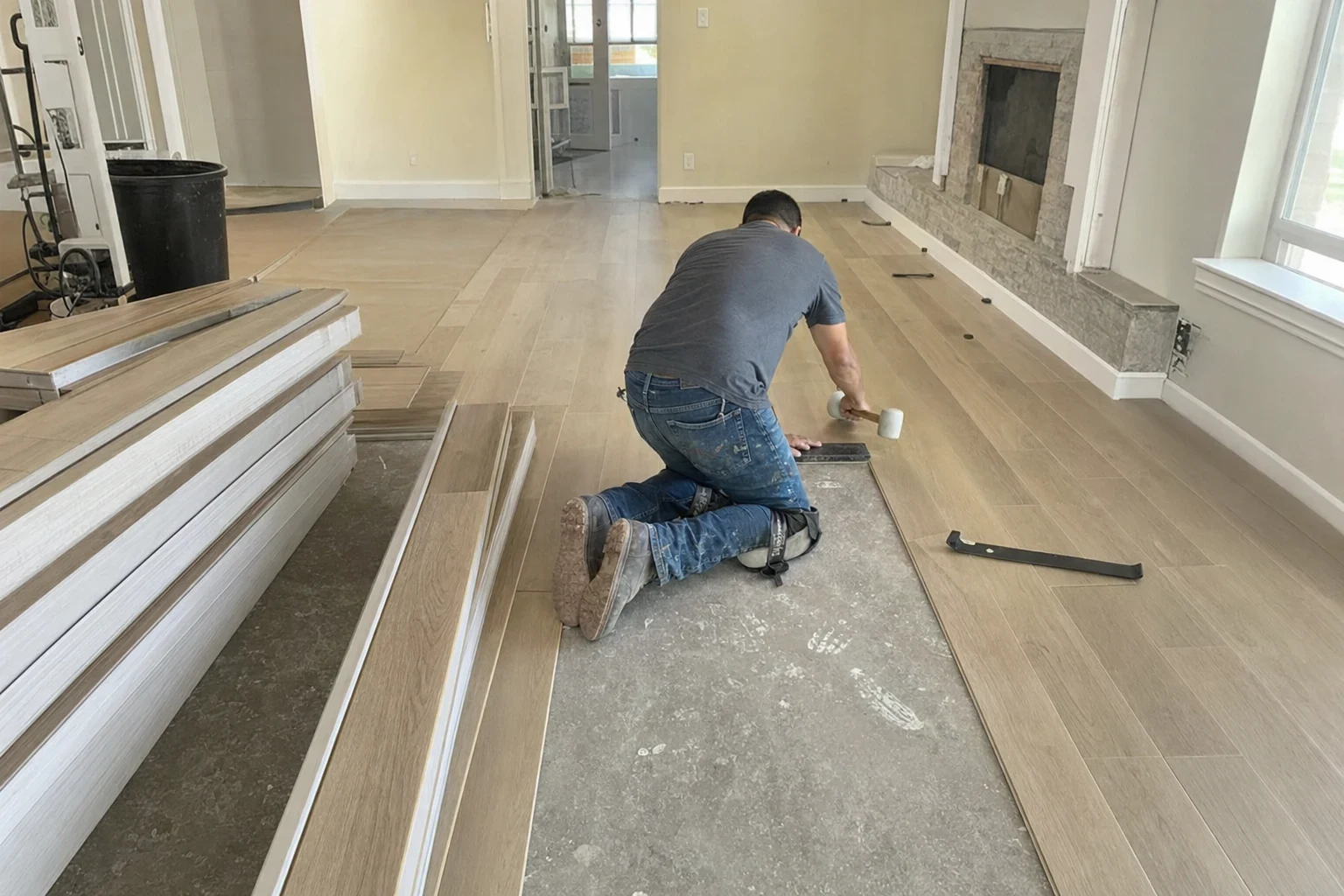
We install hardwood, luxury vinyl plank, tile, laminate and carpet in your home, plus stair flooring. Most failures start under the surface, so we test moisture, flatten the subfloor and leave proper expansion gaps before the first board goes down. We work in Bellaire, West University Place and nearby towns.
- In business 25+ years
- Insured
- 1-year workmanship warranty
- Moisture testing before install
Where We Install
We are based in Bellaire, TX, and install floors throughout the city and the surrounding area. That includes West University Place, Hunters Creek Village, Bunker Hill Village, Piney Point Village and Spring Valley Village, as well as Houston, Meadows Place, Stafford, Sugar Land and Pearland.
- Bellaire
- West University Place
- Hunters Creek Village
- Bunker Hill Village
- Piney Point Village
- Houston
- Stafford
- Meadows Place
- Spring Valley Village
- Pearland
- Sugar Land
If your home is near one of these towns and you are not sure we cover it, ask when you phone and we will tell you straight.
Flooring We Install
We have been in business 25+ years, we are insured, and every job carries our 1-year workmanship warranty on all installations. Our work covers hardwood flooring, luxury vinyl plank, luxury vinyl tile, laminate flooring, tile flooring, carpet installation, carpet tile, vinyl composition tile and stair flooring. Each material has its own rules for underlayment, fasteners and gaps, and we follow them for the product you pick. Open any service page to see how that floor goes in.
Hardwood Flooring
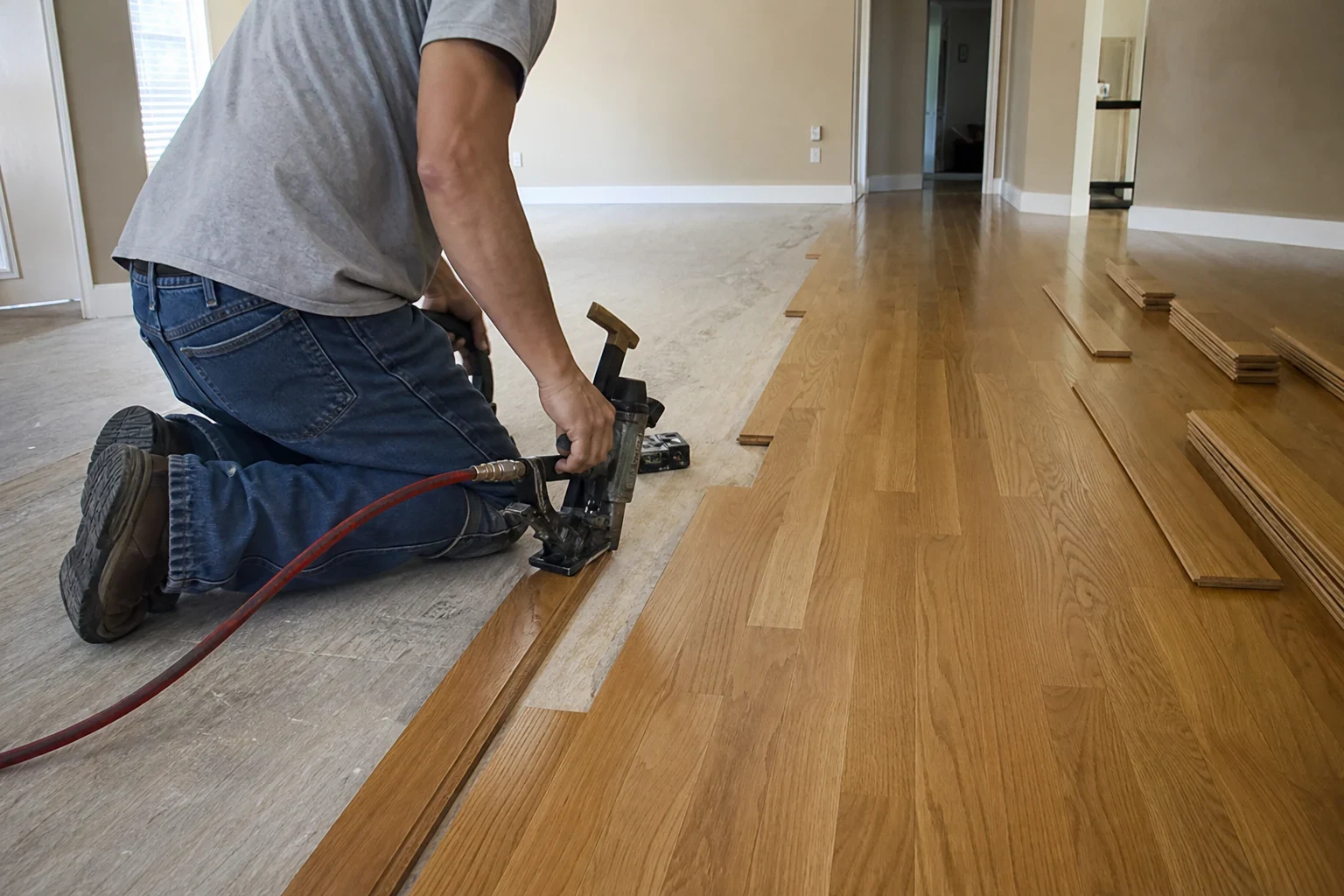
Solid and engineered hardwood installed over slab or plywood, with moisture testing, careful acclimation and clean transitions to the rest of your home.
Luxury Vinyl Plank
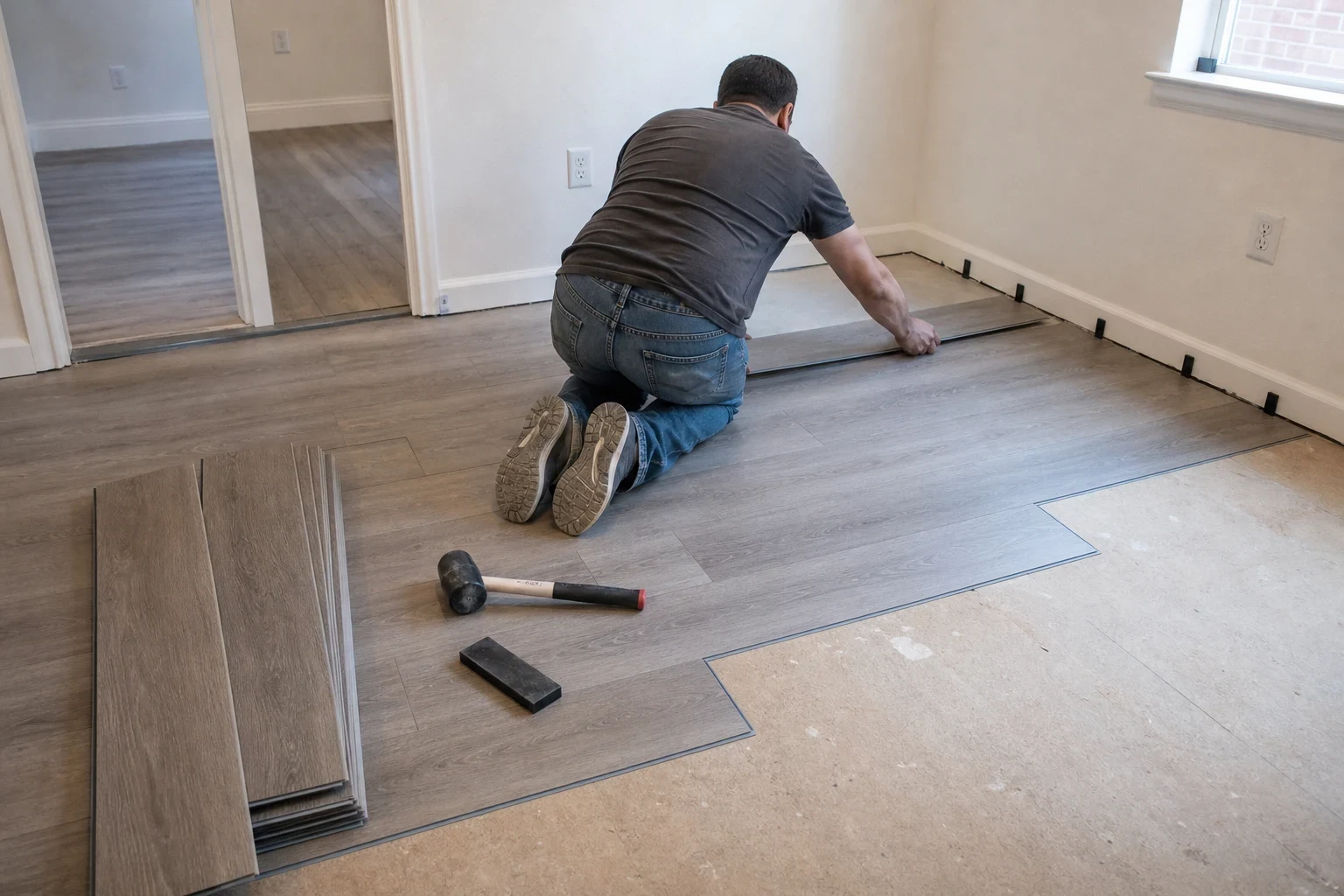
Rigid-core vinyl plank installed over a tested, flattened slab, with correct expansion gaps, undercut door casings and fitted transitions.
Tile Flooring
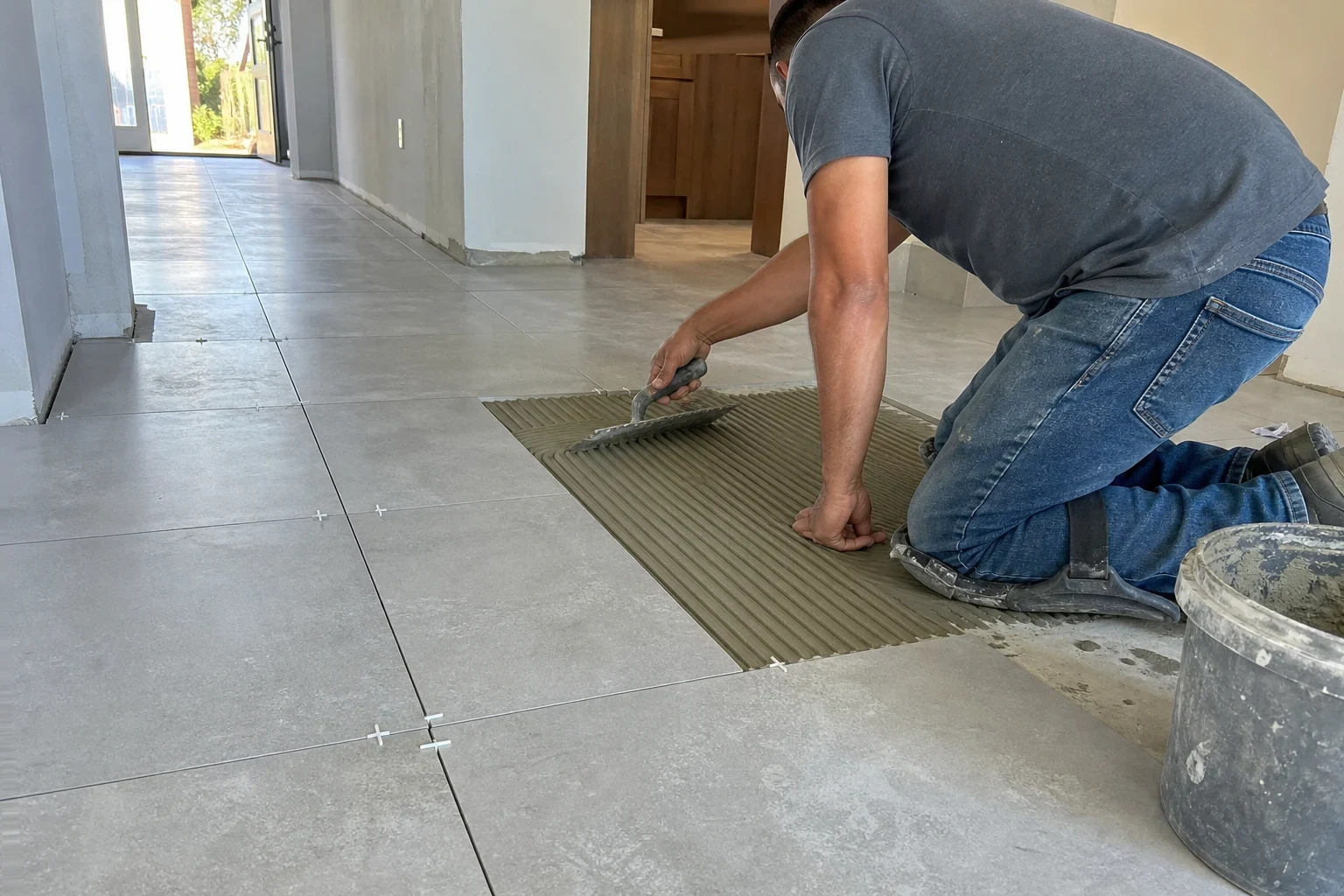
Porcelain, ceramic and natural stone floors installed over a prepped, flattened slab, with the mortar and joint details that keep tile from cracking or popping loose.
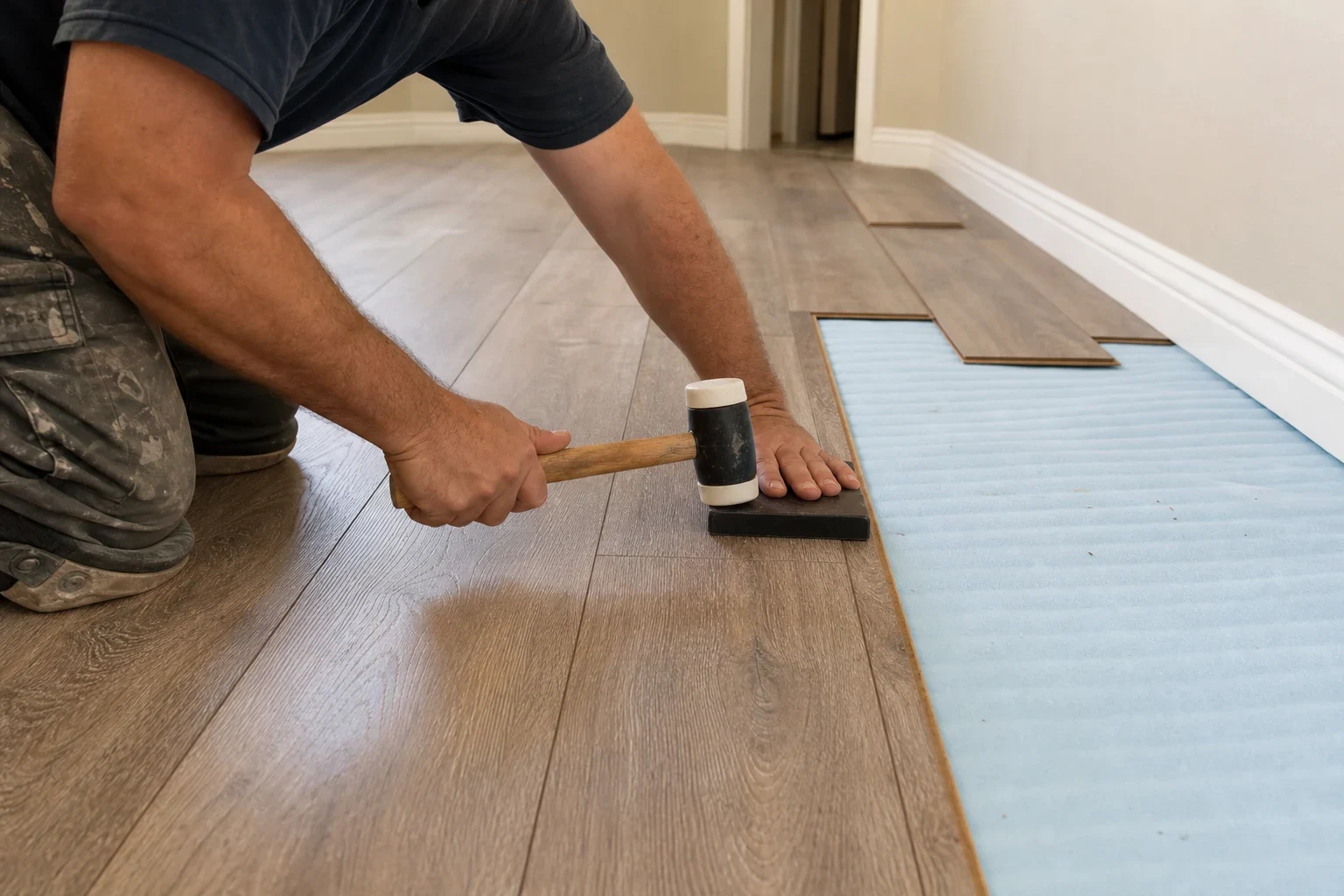
Laminate Flooring
Laminate installed over a flattened, moisture-protected subfloor with the expansion gaps and transitions that keep the locking joints tight for years.
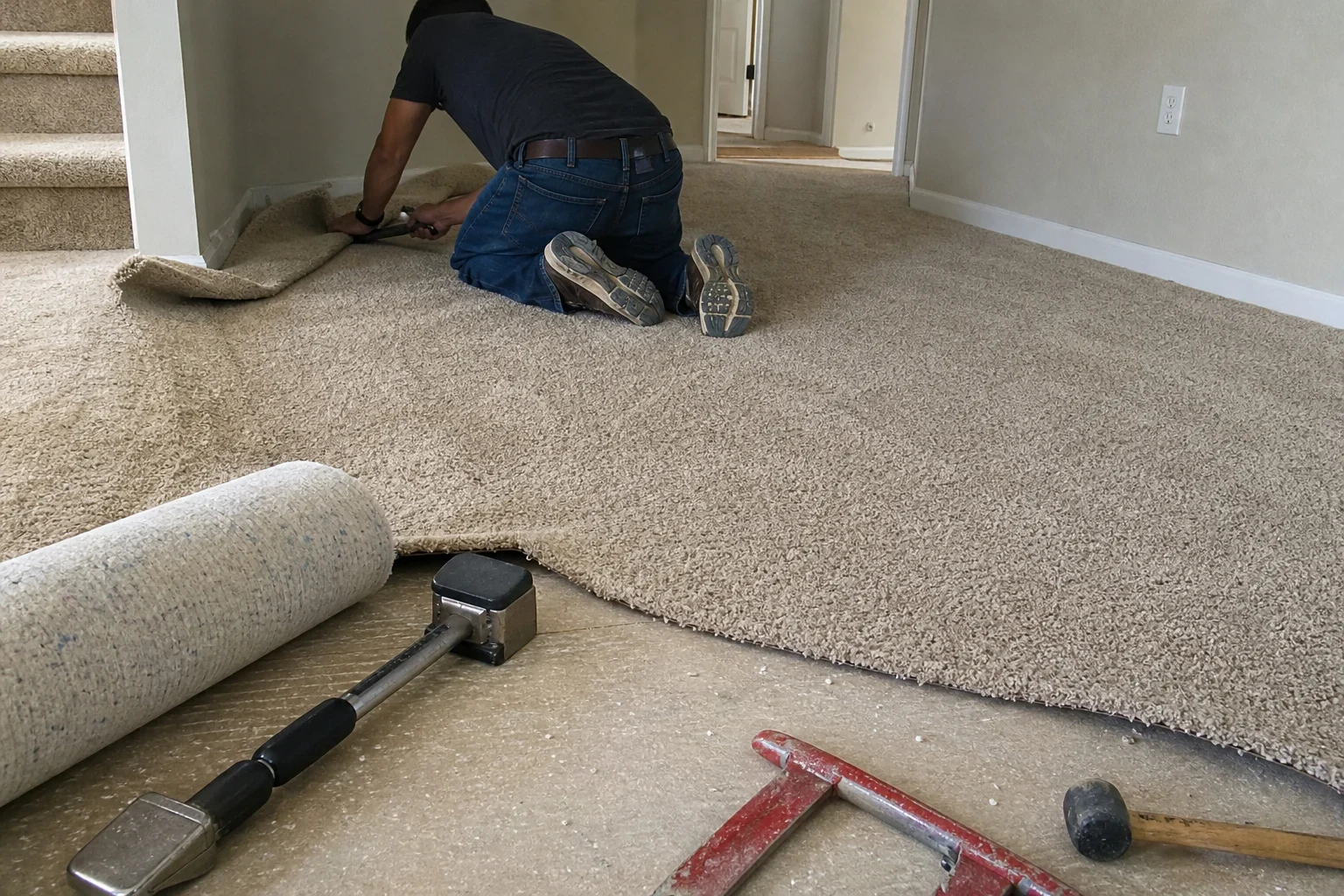
Carpet Installation
Wall-to-wall carpet laid over the right pad, power-stretched tight and seamed where you will not see it, with old carpet hauled away.
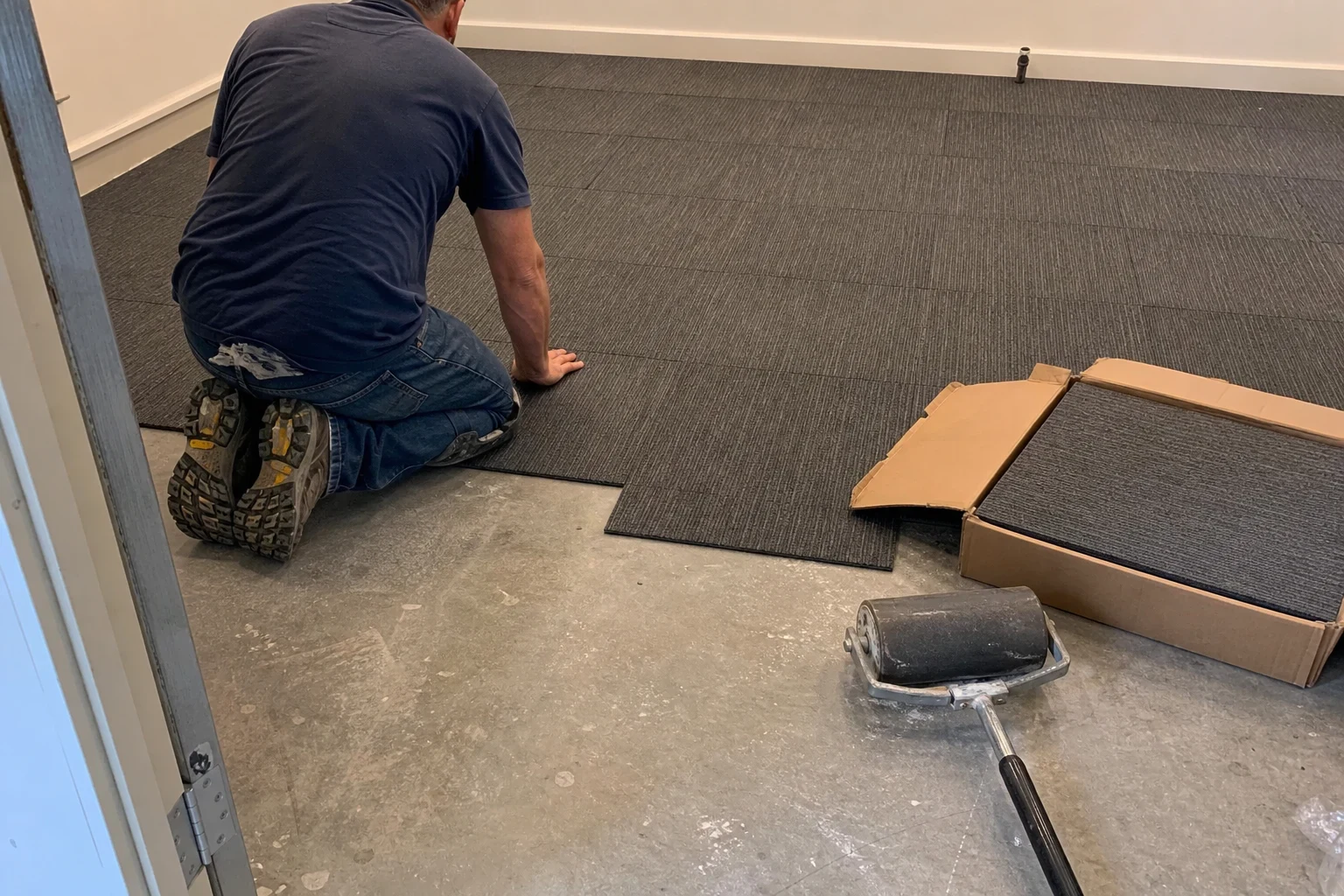
Carpet Tile
Modular carpet squares for playrooms, offices and game rooms, set on a tested, patched slab so seams stay tight and single tiles can be swapped out later.
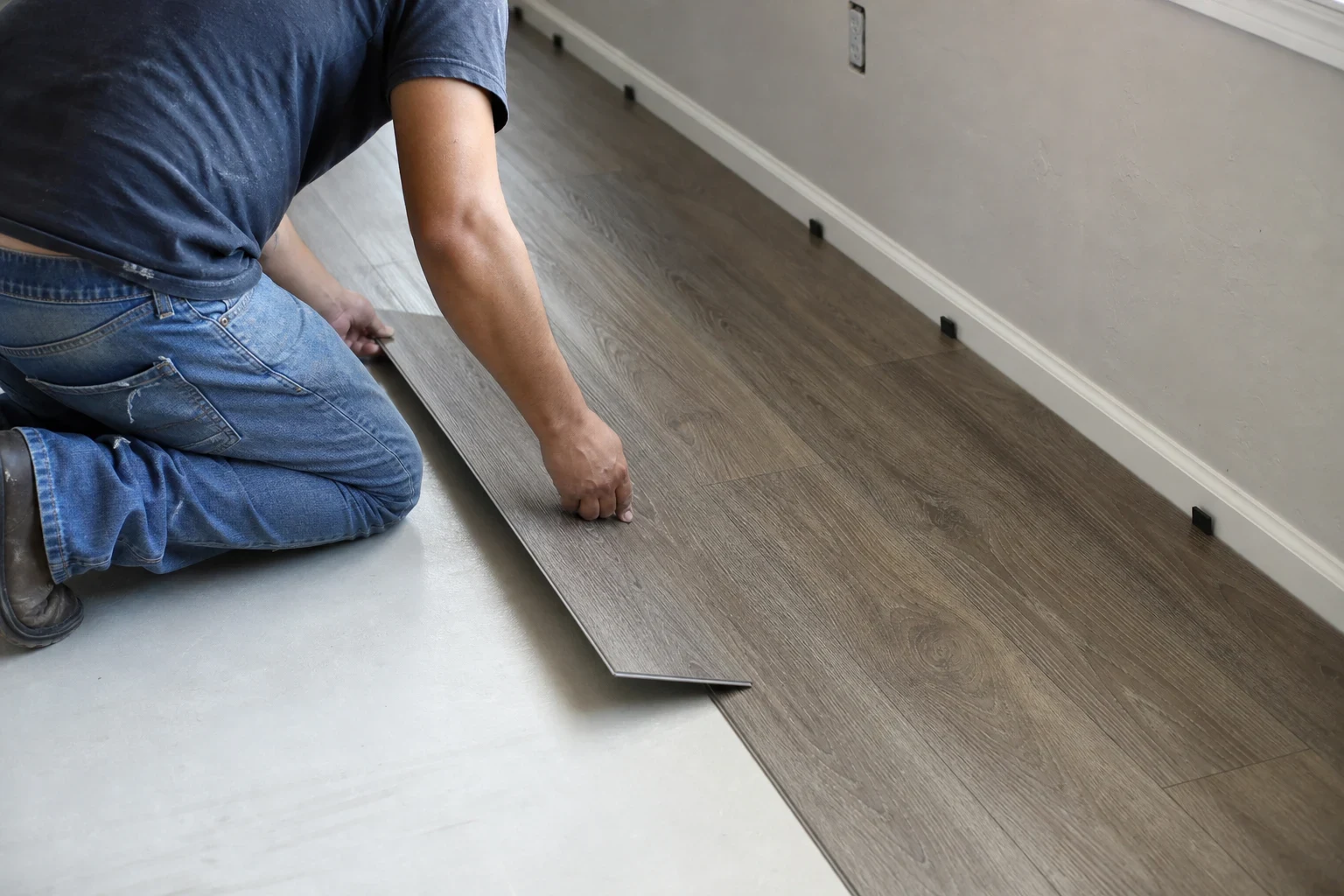
Luxury Vinyl Tile
Stone and ceramic looks in a warmer, quieter vinyl tile, installed over a tested, flattened subfloor with a layout planned before the first cut.
Vinyl Composition Tile
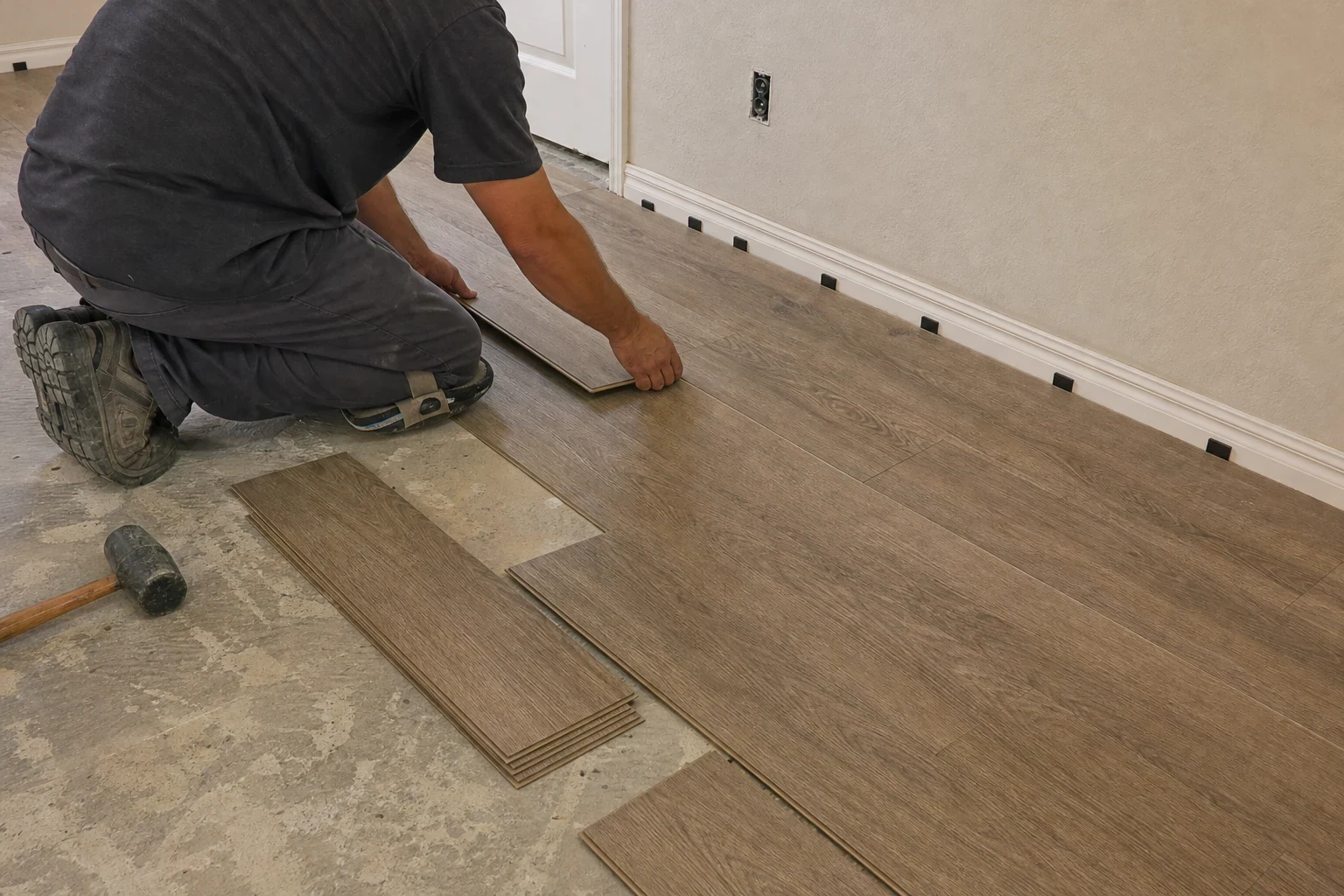
Durable 12-inch VCT for laundry rooms, mudrooms, garages and playrooms, set on a prepared slab with seams that stay closed.
Stair Flooring
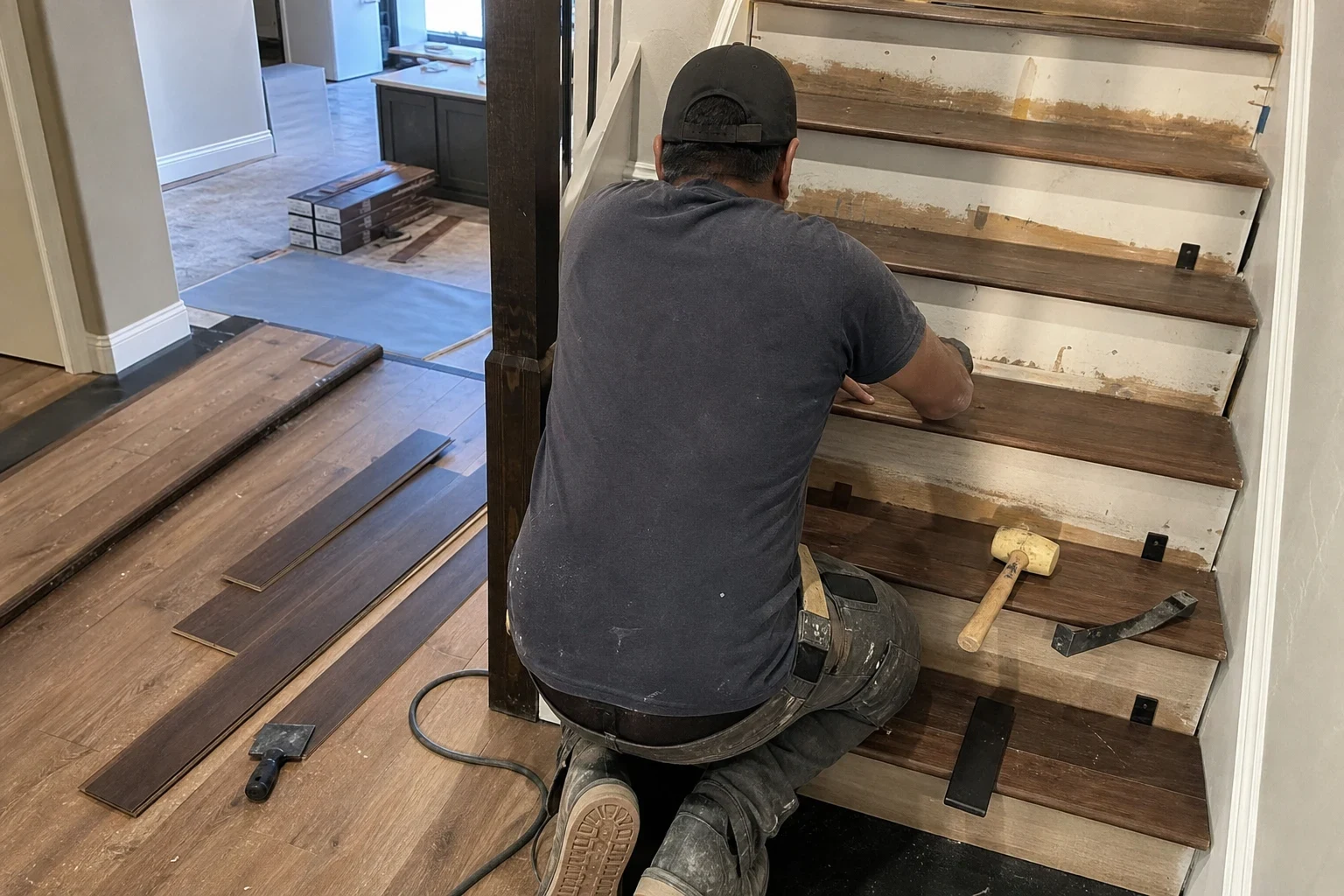
New treads, risers and nosing in hardwood, vinyl plank, laminate or carpet, fitted step by step so the stairs stay tight, quiet and level with the floors around them.
How a Flooring Job Runs
Most installs follow the same four stages. The details inside each stage change with the material.
- 1
Phone call and visit
You tell us what rooms and what flooring you have in mind. We then come out to measure, check the subfloor and take moisture readings.
- 2
Written estimate and material plan
We list the flooring, underlayment, trim and prep work line by line. For wood and some laminates we schedule delivery early so boards can acclimate in your home before install.
- 3
Prep and installation
We protect walls and adjoining rooms, remove the old floor, correct the subfloor and lay out rows so the end joints stagger properly and cut pieces at walls are not too narrow. Then the floor goes in, along with transitions and trim.
- 4
Walkthrough and cleanup
We sweep and vacuum, haul off debris and walk the floor with you. We point out care steps for your material, such as cure times for grout or when to set furniture back.
Why the Small Steps Matter
A floor rarely fails because of the plank itself. It fails at the edges, the seams and the subfloor, which is where we spend our time.
- 01
We measure moisture first
Concrete slabs can hold moisture that swells wood and lifts adhesives. We meter the slab or subfloor before ordering underlayment, and if readings run high we use a vapor barrier rated for the product instead of hoping for the best.
- 02
Flat means within tolerance
Most click-lock and engineered floors allow only a small dip over a set span before joints start to flex and separate. We check with a long straightedge, grind high spots and fill low ones with patch so the locking edges stay engaged.
- 03
Expansion gaps sized for the product
Floating floors move with humidity, so they need room at walls, door jambs and cabinets. We cut the gap the manufacturer calls for and hide it under base or quarter round, which keeps the floor from buckling in a humid summer.
- 04
Transitions planned before the first row
We decide where reducers, T-moldings and thresholds land while laying out the room, not at the end. That keeps heights even between rooms and avoids skinny slivers at doorways.
- 05
You see what we found
If we pull up old flooring and find rot, loose subfloor or cracks in the slab, we show you photos and explain the fix before doing anything that changes the price.
What Moves the Price of a New Floor
Two rooms of the same size can price very differently. The material is only part of it; prep and layout often decide the rest. Here is what we look at when we put your estimate together.
After we see the space and take measurements, we give you a written estimate with each item broken out, so you can see what the prep costs apart from the flooring.
- Square footage and layout
- Open rooms go faster than halls, closets and angled walls. Diagonal or herringbone patterns add cuts and waste.
- What comes up first
- Removing carpet and pad is quick. Tearing out glued tile or old sheet vinyl takes more labor and can leave adhesive that has to be scraped or ground off.
- Subfloor condition
- A slab that needs grinding and leveling compound, or a wood subfloor that needs new screws and patched sections, adds time and material before the new floor can go in.
- Material and underlayment
- Solid hardwood, porcelain tile and thick-wear-layer vinyl cost more than entry products. Vapor barriers, sound pads and crack isolation membranes add to the line items when a floor calls for them.
- Stairs and trim
- Each stair tread and riser is cut and fit by hand, so stairs price per step. New baseboard, quarter round and transition pieces are listed separately.
- Moving furniture and appliances
- Clearing heavy furniture or pulling a refrigerator and range adds labor, and we list it so you can decide whether to handle it yourself.
Flooring Questions We Hear Often
- Do you warranty your installation work?
- Yes. We provide a 1-year workmanship warranty on all installations. If an installation issue shows up in that time, such as a seam opening or a transition coming loose, call us and we will look at it. Manufacturer coverage on the material itself is separate and depends on the product.
- Which flooring holds up best to humidity?
- Luxury vinyl plank, luxury vinyl tile and porcelain tile handle moisture best because they do not swell. Engineered hardwood is more stable than solid hardwood in humid air. Laminate has improved, but its core can still swell if water sits at the seams, so we check the product's water rating with you.
- Can you install over my existing floor?
- Sometimes. Vinyl plank can often float over flat tile that is still firmly stuck to the slab, but carpet, cushioned vinyl and loose tile must come out. Going over an old floor also raises the height at doors and cabinets, so we check clearances before recommending it.
- How long does an installation take?
- A couple of rooms of vinyl plank or laminate often take a day or two once the floor is prepped. Tile takes longer because thinset and grout need cure time. Hardwood may need several days of acclimation before we start. We give you a schedule with the estimate.
- Do I need to move my furniture?
- You can, or we can do it and list it on the estimate. We ask that you clear small items, electronics and anything fragile. Heavy appliances can be pulled and reset by us, and we disconnect only what is safe to disconnect.
- Why does subfloor prep cost extra?
- Because it is real work that the flooring cannot do for itself. Grinding high spots, pouring leveling compound and refastening loose plywood take hours and materials. Skipping it is the most common reason floors squeak, flex or separate, so we price it openly instead of hiding it.
- What happens to my old flooring?
- We remove it, bag the debris and haul it away as part of the job. We also clean up dust from cutting and leave the room ready to use.
About Flooring Bellaire
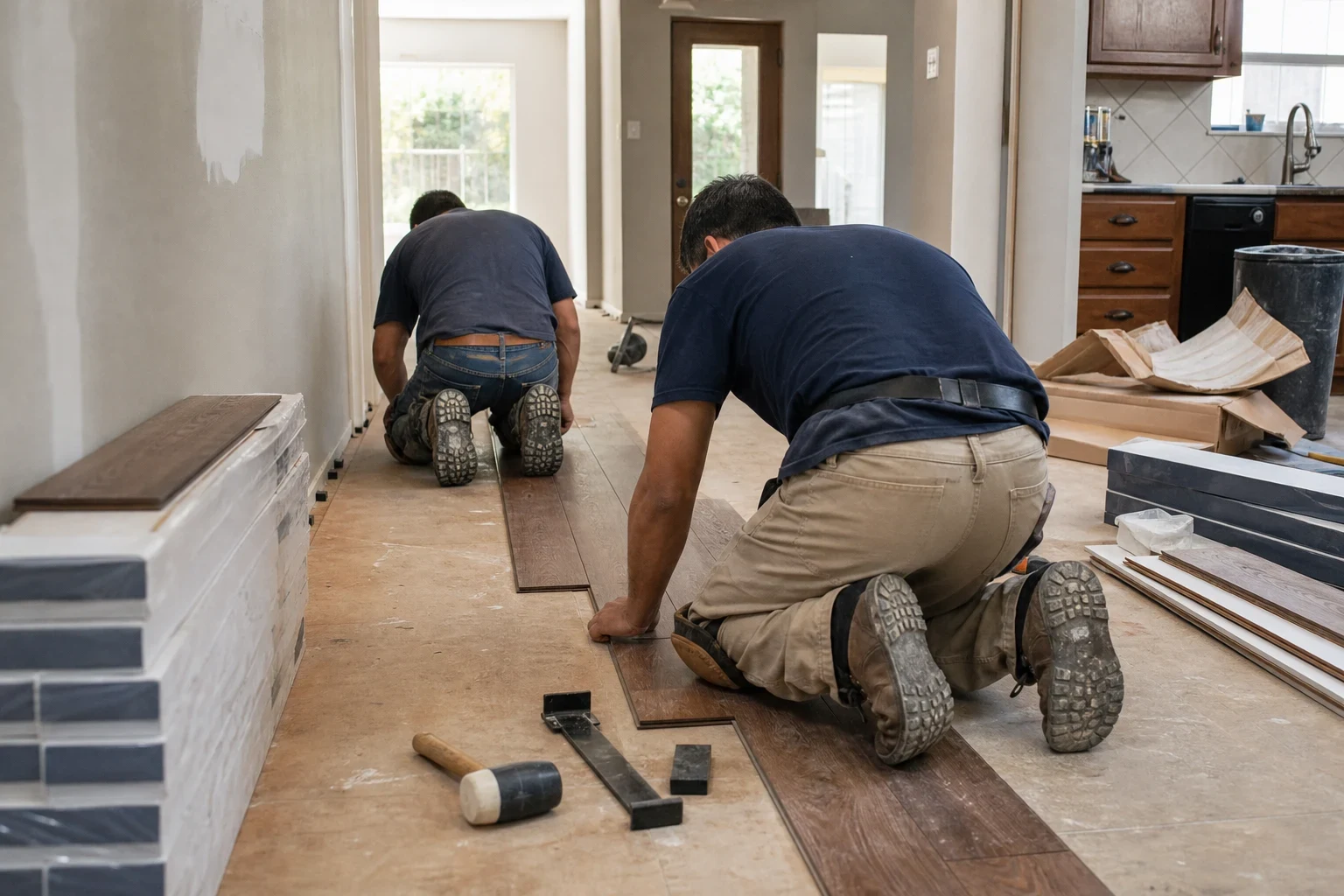
We are a flooring installation company working in homes around Bellaire. Our crews handle the whole job, from tear-out and subfloor prep to the last piece of quarter round, so the person laying your floor is the same one who checked what is under it.
We focus on installation done to the manufacturer's specs because that is what keeps a floor flat and quiet for years. Ask us why a step matters and we will tell you, whether it is the trowel notch for a large-format tile or the stagger distance on vinyl plank end joints.
- In business
- In business 25+ years
- Insurance
- Insured
- Warranty
- 1-year workmanship warranty on all installations
Start With a Floor Built to Last
Tell us which rooms you are redoing and what material you are leaning toward. We will set a time to measure, check what is underneath and walk you through the options.