ServicesStair Flooring
Stair Flooring in Bellaire
A staircase takes more wear per square foot than any other floor in your home, and most of it lands on the nosing. We install treads, risers and nosing in hardwood, vinyl plank, laminate or carpet, fastened so each step stays solid and quiet.
Why Stairs Are Their Own Job
A flat floor is one plane. A staircase is a run of short, separate surfaces, each with an outside edge that takes a heel strike every time someone goes down. That edge is where cheap stair work fails first: nose molding pops loose, carpet wears through at the bullnose, and planks shift because the adhesive was skimped on.
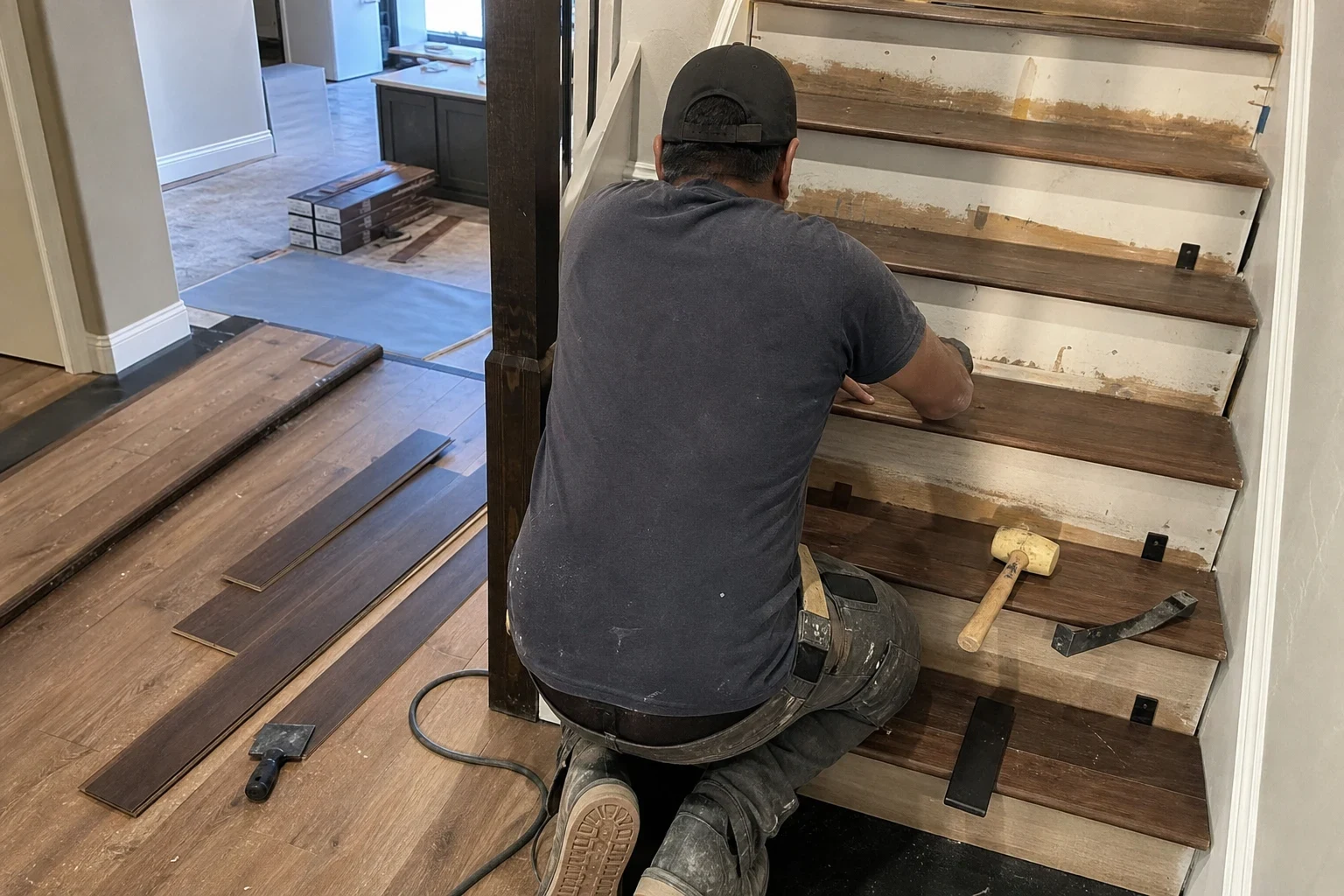
We build each step as its own small installation. The tread is cut to fit that step, since few stairs are perfectly square. Then it is set in construction adhesive and fastened, and the nosing is joined so it carries the load instead of hanging off the front. Risers are cut individually and scribed to the skirt board.
Most of our stair jobs tie into new floors on the landing or the level below, so we match the stair material to work like hardwood flooring or luxury vinyl plank and plan the transitions before anything is cut. We have been doing this for more than 25 years, and the details below are what we have learned to get right.
What the Work Includes
- Tear-out down to the stringers
- We pull old carpet, pad, tack strip and staples, or remove worn treads. Leftover staples and tack nails telegraph through new material, so every one comes out.
- Structural check of each step
- We look at the existing treads and the stringers under them. Squeaks usually mean a tread has pulled away from the stringer, and we screw or shim it tight before covering it.
- Treads and risers cut per step
- Each tread and riser is measured and cut for its own step, because older staircases often vary by a fraction of an inch from top to bottom. That keeps gaps at the skirt boards and walls tight.
- Nosing set to carry load
- For hardwood we use solid treads with an integral bullnose or a matched nose piece. For vinyl and laminate we use stair nose molding made for that product, glued and fastened into solid backing so it does not flex.
- Carpet wrapped the right way
- On carpeted stairs we choose waterfall or cap-and-band (Hollywood) style with you, then stretch it over pad and tack strip and tuck it tight under each nosing. Our carpet installation page covers material choices.
- Landing and transition work
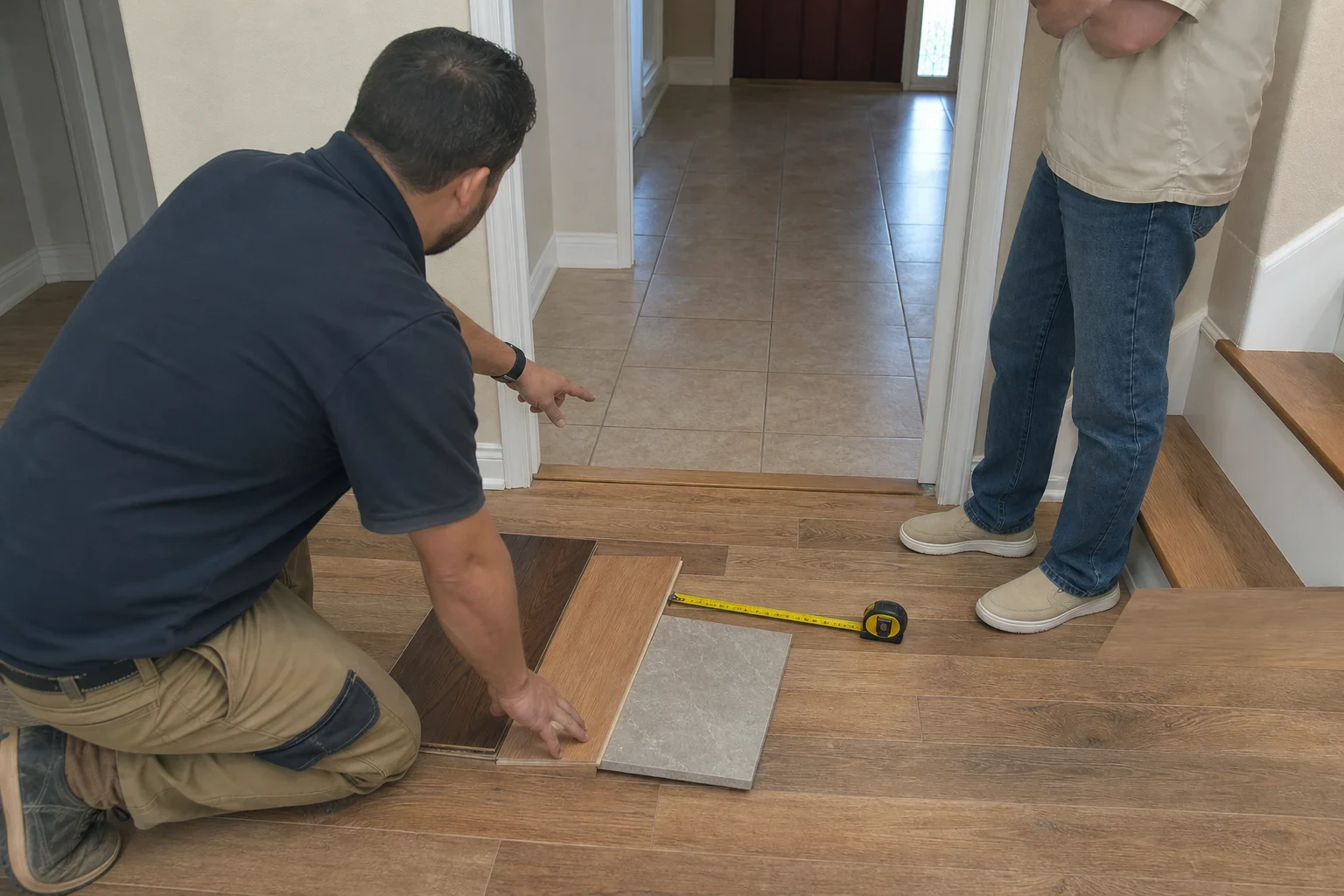
- The top step and landing are fitted to meet the upstairs floor flush, with the right reducer or nose piece where materials change.
Signs Your Stairs Are Ready for New Flooring
Carpet worn at the edge
Matted or bald carpet on the front of each step means the pad underneath has broken down. It also makes the edge harder to see and easier to slip on.
Squeaks and movement
A tread that creaks or flexes has usually separated from the stringer or lost its glue bond. We fix that underneath before new material goes on, so the squeak does not come back through the new surface.
Loose or cracked nose molding
Nosing that rocks or has split along the fastener line was likely glued only, or set over a hollow edge. It gets worse with every trip down the stairs.
New floors that don't match
If you are replacing flooring downstairs or on the landing, the stairs stand out quickly when they stay old. Doing them together lets the color and edge profile run continuously.
Pets and slick finishes
Dogs struggle on glossy treads, and claws shred loop carpet. A textured vinyl, a matte wood finish or a tighter cut-pile carpet can solve both problems.
What Moves the Price of Stair Flooring
Stairs are priced by the step more than by the square foot, because most of the labor is cutting, fitting and fastening at each nosing. Two staircases with the same step count can still differ a lot, so we price yours after seeing it. You get the number by phone or at the visit, broken out so you can see where it comes from.
Number and shape of steps
Straight runs go fastest. Winders, pie-shaped steps, open sides and bullnose starter steps take extra cutting and custom nosing.
Material choice
Solid hardwood treads, matched vinyl or laminate stair nose pieces, and carpet with pad all carry different material and labor costs.
Condition under the old covering
Carpet-grade treads that are cracked or badly out of level may need replacing instead of capping. We show you what we find before doing extra work.
Railings and open sides
Balusters seated in the treads have to be worked around or removed and reset, which adds time on each step.
How a Stair Job Runs
- 1
Measure and pick materials
We measure every tread and riser, check rise heights and talk through materials with you. Capping existing treads adds thickness, so we check how that changes the top and bottom step heights to keep the rise even.
- 2
Protect and tear out
We cover the floors at the base and the landing, then remove the old covering. The stairs are usually out of use for part of the day, and we tell you ahead of time so you can plan around it.
- 3
Repair and prep
Loose treads get screwed to the stringers, high spots are sanded flat and old fasteners are pulled. A stable, flat step is what lets adhesive and nosing hold for years.
- 4
Install and clean up
We set risers first, then treads and nosing from the bottom up, allowing cure time where the adhesive needs it. We vacuum, haul away the debris and walk the stairs with you before we leave.
Stair Flooring Questions
Can you put vinyl plank or laminate on my stairs?
Yes. We use the stair nose molding made for that product line, set in adhesive and fastened into solid backing. Planks alone are never left hanging over the edge. Matching the stairs to your luxury vinyl plank or laminate flooring keeps the color continuous.
My stairs are carpeted. Is there hardwood underneath?
Usually not finished hardwood. Most carpeted stairs were built with plain pine or engineered treads meant to be covered. We either cap them with retrofit treads or replace them with solid treads, depending on their condition and how the added height affects the step rise.
How long will we be without the stairs?
A typical straight staircase is done in a day, though adhesive on hardwood treads may need a few hours before heavy use. We plan the work so you can still get up and down at set times if the stairs are your only route.
Will my new stairs squeak?
We fix squeaks at the source before covering anything by fastening loose treads to the stringers. Our 1-year workmanship warranty applies to all installations, so a step we installed that starts moving in that first year falls under it.
What happens if something gets damaged during the work?
We lay protection over the floors at the base of the stairs and on the landing before tear-out starts, and we carry insurance for the work we do inside your home. If something is scuffed or broken, we tell you right away and talk through how it gets put right.
Get Your Stairs Measured and Planned
Tell us how many steps you have, what is on them now and what you want underfoot. We will talk through materials and nosing options and set up a time to measure.