ServicesLuxury Vinyl Tile
Luxury Vinyl Tile Installation in Bellaire
Luxury vinyl tile gives you the look of stone or ceramic with a softer, warmer surface underfoot. How long it lasts depends on the slab under it, the expansion gaps around it and the way each seam is set. We handle those details on every job.
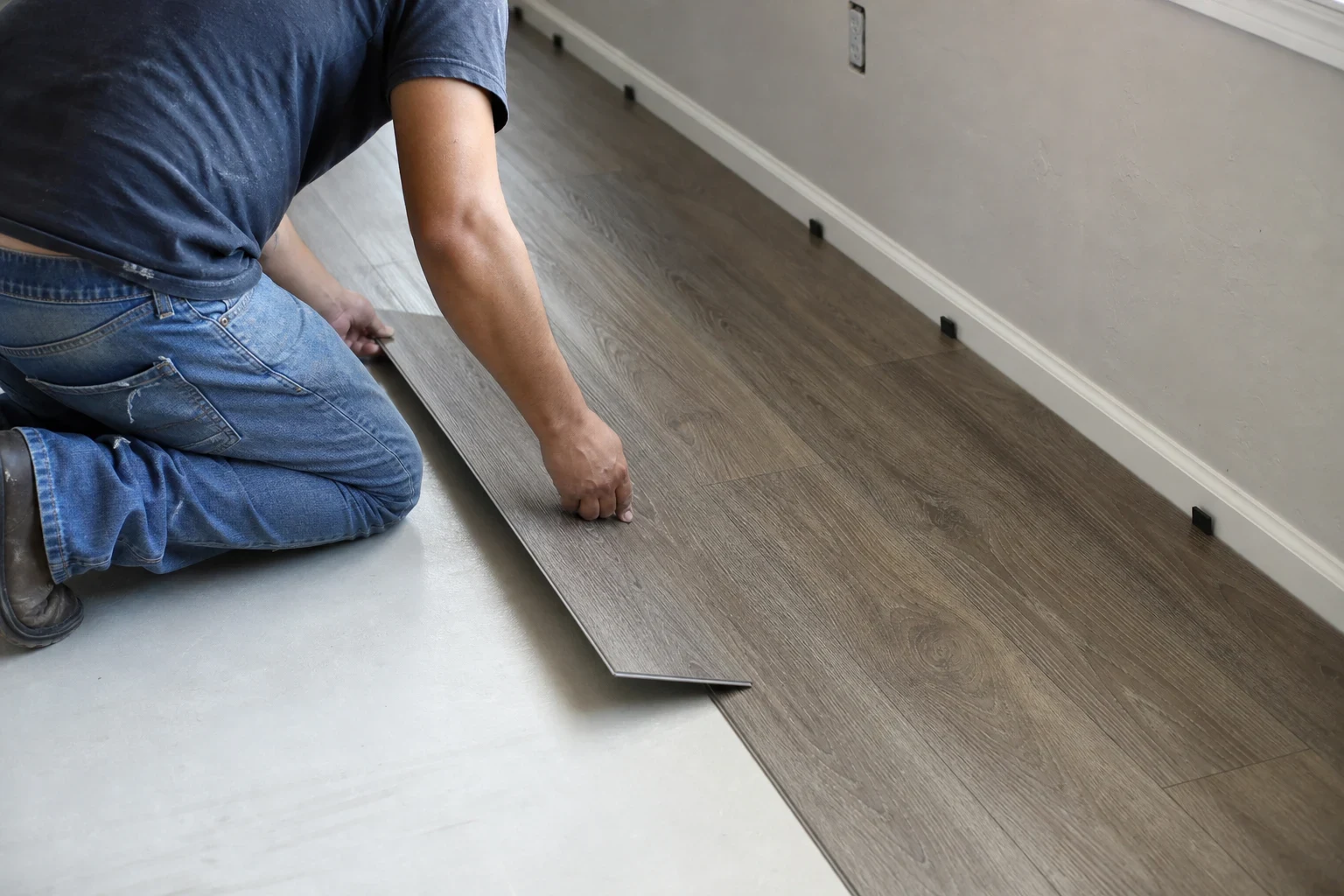
What Luxury Vinyl Tile Is and When It Fits
Luxury vinyl tile, or LVT, is a layered vinyl product cut into square or rectangular tiles, often 12 by 24 inches, printed to look like slate, marble, travertine or concrete. It comes in two main builds. Rigid core tiles click together and float over the subfloor. Dry-back tiles are thinner and glued down. Some styles are made to be grouted, so the joints look like real tile.
It is a good choice for kitchens, baths, laundry rooms and entries where you want a tile look without cold, hard ceramic or cracked grout lines. The wear surface resists water, but water can still get through seams and around the edges. Our installation work is about closing those paths and keeping the core sitting flat.
If you prefer a wood look in long boards, see our luxury vinyl plank page. If you want genuine porcelain or ceramic, our tile flooring service covers that.
What Our LVT Installation Includes
- Moisture testing on the slab
- Most homes here sit on concrete slabs, and a slab can push moisture up into the floor. We take readings before we pick an underlayment or adhesive. A floating floor may need a vapor barrier, and a glue-down floor needs an adhesive rated for the moisture we measure.
- Flattening the subfloor
- Click joints only lock fully when the base is flat, usually within 3/16 inch over 10 feet. We grind down high ridges and fill low spots with patching or self-leveling compound. Skip this step and the locks can flex, which over time shows up as gapping or tile edges that sit higher than their neighbors.
- A layout planned from the center
- We snap reference lines and dry-lay the tiles so you don't end up with thin slivers at doorways or along the most visible wall. Offset patterns are set at the stagger the manufacturer allows, because some large tiles bow slightly and will lip at a 50 percent offset.
- Expansion gaps and trim
- Floating LVT needs a perimeter gap, usually about 1/4 inch, so it can move with temperature changes. We undercut door jambs so the tile slides beneath them, then cover the gap with baseboard or quarter round, never with caulk that pins the floor in place.
- Bath and kitchen details
- We pull toilets and reset them on a new wax ring, and we seal the edges at tubs and showers with flexible silicone. Floating floors are not run under heavy kitchen islands or built-in cabinets, because that weight pins the floor and can cause buckling elsewhere in the room.
Signs Your Floor Is Ready for New LVT
Cracked grout or loose ceramic
Hollow-sounding ceramic tile and crumbling grout lines usually mean the bond has failed. Depending on how flat and solid the existing tile is, we will either remove it or prepare it to go under the new LVT.
Old sheet vinyl that's peeling
Curling seams and bubbles in sheet vinyl let water reach the subfloor. LVT gives you tighter joints and a thicker wear layer in the same rooms.
A cold, hard bathroom floor
If you love the look of stone but not the feel on bare feet in the morning, vinyl tile keeps that look and feels warmer and quieter underfoot.
Carpet in a wet room
Carpet in a laundry room, kitchen or entry soaks up spills and holds odor. LVT wipes clean and handles water at the surface.
A previous LVT job that's separating
Gaps between tiles, peaked seams or edges lifting at the walls usually trace back to an uneven slab or a missing expansion gap. We can tell you which one, then fix the cause when we reinstall.
How an LVT Job Runs
- 1
Measure and test
We measure each room, check the slab with a long straightedge and take moisture readings. You get a written breakdown of the prep, the product and the trim, so you know where the money goes.
- 2
Acclimate the tile
The boxes sit in your home at normal living temperature for the time the manufacturer specifies. This keeps the tiles from shrinking or growing after they are locked or glued in place.
- 3
Remove and prepare
We pull the old flooring, toilets and baseboard as needed, then grind, patch and level the slab. Doorways and openings to your other rooms are covered to keep down dust.
- 4
Install and trim
We lay the tiles from the reference lines, staggering and cutting around jambs, vents and cabinets. Then come the transitions, base trim and silicone at the wet edges. A click floor can be walked on as soon as we finish, while a glue-down floor needs time for the adhesive to cure before furniture goes back.
- 5
Walk-through and cleanup
We walk the floor with you and check that the seams are tight, the edges are clean and the transitions are secure. We haul off debris and leftover scraps, but we leave you a box of spare tiles for future repairs.
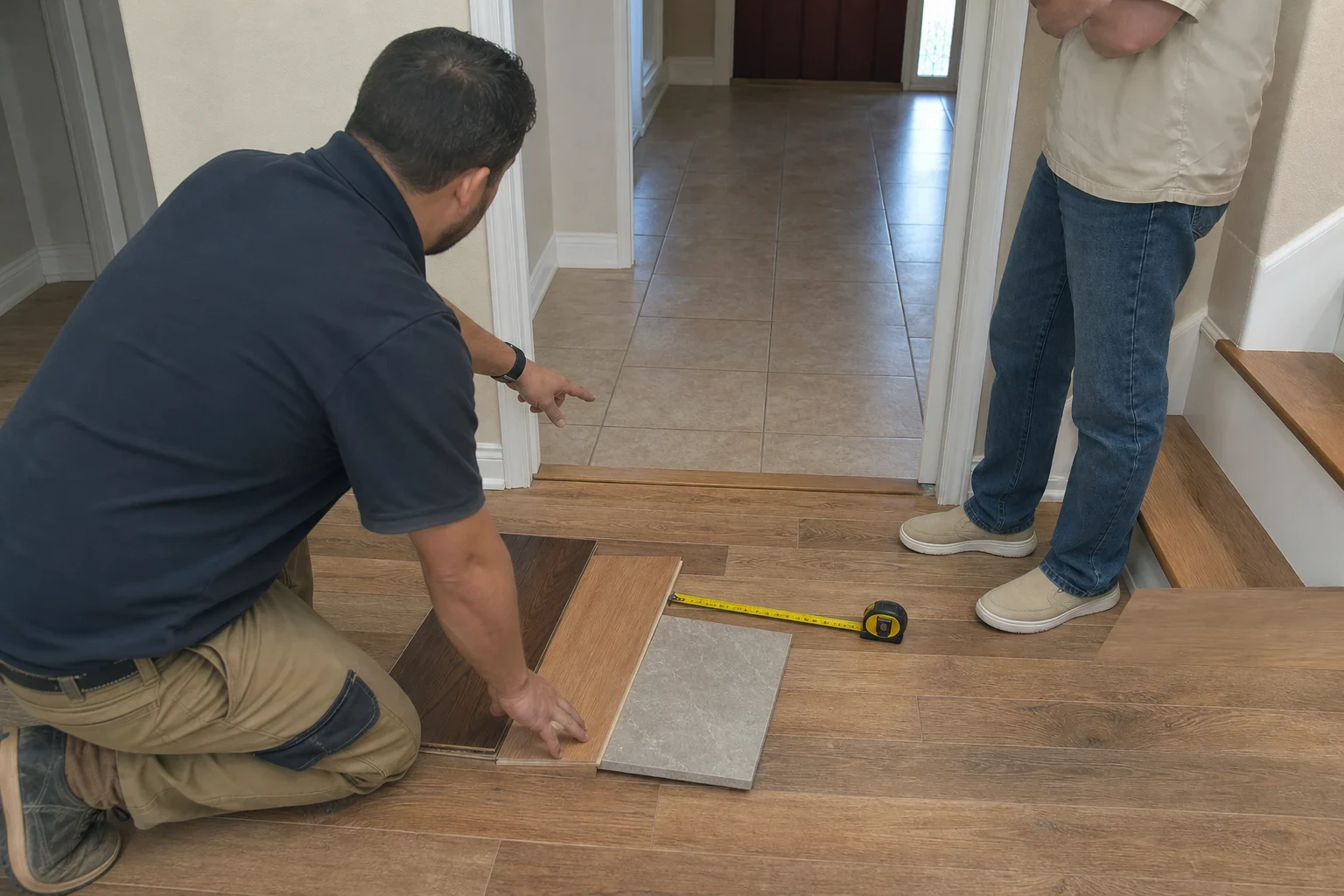
What Moves the Cost of Luxury Vinyl Tile
The price of an LVT job comes from the tile you choose and from the work underneath it. Two rooms of the same size can price very differently once we see the slab. That is why we measure and test before we put numbers in writing.
- Subfloor condition
- A flat, dry slab needs little work. Humps, dips and old adhesive residue add grinding and leveling compound, and high moisture readings add a vapor barrier or a different adhesive.
- What comes out first
- Pulling carpet is quick. Removing ceramic tile set in mortar takes much longer and creates more debris to haul away.
- Tile build and pattern
- Rigid core and dry-back products differ in material and labor, and thicker wear layers cost more. Diagonal and herringbone layouts need more cuts and produce more waste than a straight lay.
- Room shape and fixtures
- Bathrooms with toilets, pedestals and tub edges take more cutting per square foot than an open living area. The number of transitions, stair nosings and new base trim also adds to the total.
Luxury Vinyl Tile Questions
Something not covered here? (346) 447-3257
What's the difference between luxury vinyl tile and luxury vinyl plank?
They are built the same way. The difference is shape and print. LVT comes in square or rectangular tiles with stone and ceramic looks, and some styles can be grouted. Plank is long and narrow and usually printed with a wood grain.
Can you install LVT over my existing ceramic tile?
Sometimes. The old tile must be firmly bonded, and the grout lines need to be skim-coated so they don't telegraph through the vinyl. The added height also has to work with your doors and the floors next to it. We check all of this on site and tell you whether removal is the better route.
Is luxury vinyl tile waterproof in a bathroom?
The tile itself won't absorb water, but water can still get through the seams and around the edges. We seal tub and shower edges with silicone and reset toilets on new wax rings so water stays on top of the floor. A long-running leak still needs to be fixed at the source.
How long does an LVT installation take?
A single bathroom or laundry room often takes about a day once the tile has acclimated. A kitchen with tile removal and slab leveling can take longer. We give you the expected schedule when we quote the job.
Is the installation covered if something goes wrong?
Yes. Every installation comes with a 1-year workmanship warranty. If a seam opens or a transition comes loose because of how we installed it, we come back and correct it. Damage from a plumbing leak or other causes after the job is a separate matter, but we can still look at it and tell you what the repair involves.
Get Your Vinyl Tile Done Right From the Slab Up
We have been installing floors for 25+ years, and we are insured for the work we do in your home. Tell us about your room and the look you want, and we will walk you through the options.