ServicesTile Flooring
Tile Flooring in Bellaire, Set Flat and Built to Hold
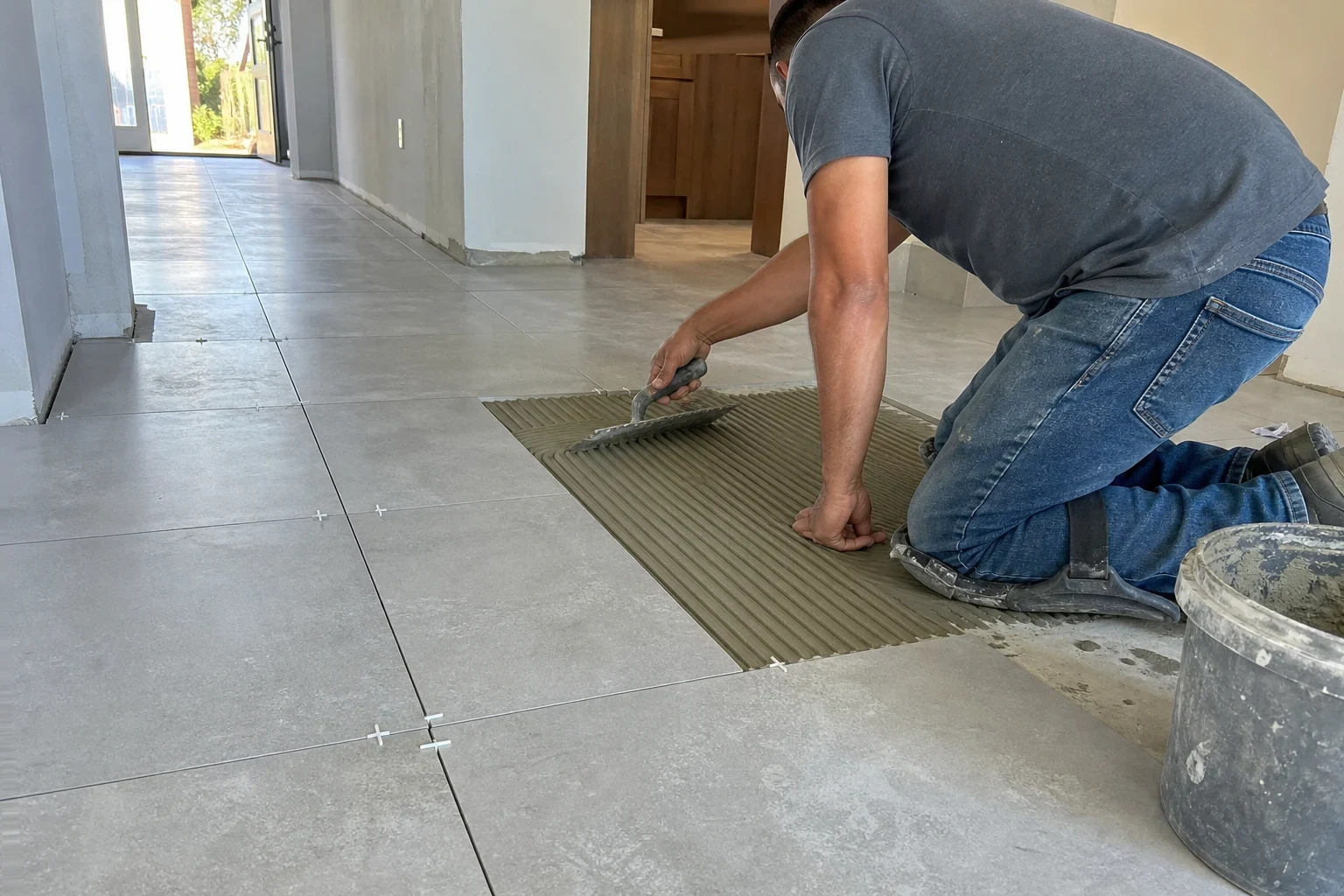
We set porcelain, ceramic and natural stone wherever your home needs a hard, water-resistant floor, from bathrooms to open living spaces. Most failed tile traces back to a few skipped steps: an unflattened slab, thin mortar coverage or no room for movement. We do those steps on every job.
Why Tile Floors Crack, and How We Prevent It
Tile is rigid. The slab under it is not perfectly flat, and it moves a little with soil moisture and temperature. When a tile is set on high and low spots, or held by mortar only on the ridges, it carries load on a few points and eventually cracks or sounds hollow underfoot. Grout lines split for the same reason when the floor has nowhere to expand.
We have been in business 25+ years, and the fix has not changed: flatten the substrate, get the mortar to fully wet the back of every tile, isolate cracks in the slab and leave movement joints at the perimeter and through large fields. Most slabs in the Houston area sit on expansive clay, so that last detail matters more here than in many places.
Tile is the right call for wet rooms, high-traffic entries and anyone who wants a floor that shrugs off spills and pets. If you want something warmer or quicker to install, our pages on luxury vinyl tile and luxury vinyl plank cover those options.
What a Tile Installation Includes
- Removal of the old floor
- We take up carpet, vinyl, laminate or old tile and scrape the slab clean of adhesive and old thinset. Tile demo is dusty, so we seal off doorways and cover returns before we start.
- Slab flattening
- We check the floor with a long straightedge, grind high spots and fill low spots with patch or self-leveling underlayment. Large-format tile needs a flatter surface than small tile, and we hold to that tighter tolerance.
- Crack isolation or uncoupling membrane
- Existing slab cracks get a crack isolation membrane so they do not telegraph through the new tile. On floors with more movement, we set over an uncoupling membrane that lets the slab shift without stressing the tile above it.
- Layout and full-coverage setting
- We dry-lay the room to center the pattern and avoid sliver cuts at doorways. Each tile is set with the right trowel notch, back-buttered when the size calls for it, and spot-checked by pulling a tile to confirm mortar coverage.
- Movement joints, grout and trim
- We leave a gap at walls and cabinets, hidden under baseboard, and fill field joints with color-matched flexible sealant instead of grout. Then we grout, clean the haze, and install transitions to adjoining floors.
Signs Your Tile Floor Needs Replacing
Hollow sound when you tap
A dull, drummy sound means the tile has lost its grip on the mortar or never had full contact to begin with. Hollow tiles are the ones that crack next.
Cracks that run across several tiles
A crack that continues from tile to tile in a straight line usually follows a slab crack below. Replacing single tiles will not stop it without isolating the crack.
Tented or lifting tiles
Tiles that pop up in a ridge, often near a sunny window or the middle of a long room, are pushing against each other because no movement joints were left.
Crumbling grout and loose edges
Grout that powders out or keeps cracking points to movement or weak adhesion underneath. In a bathroom, open joints also let water reach the substrate.
Uneven edges you can feel
Lippage, where one tile edge sits higher than the next, catches toes and chair legs. It is common with large tile set on an unflattened slab.
What Moves the Price of Tile Flooring
The tile itself is only part of the cost. Labor on tile depends heavily on what is under the old floor and how much cutting the layout needs, and we cannot see the slab until the old floor comes up. We price the prep as its own line so you can see where the money goes.
Tile size and material
Large-format porcelain needs a flatter slab, more mortar and two people to set each piece. Natural stone needs sealing and careful handling. Small mosaics take more grout and labor per square foot.
Slab condition
A flat, clean slab costs least. Heavy grinding, self-leveling underlayment, or crack isolation over several cracks adds time and material.
What is coming out
Pulling carpet is quick. Breaking up old tile set in a thick mortar bed is slow, heavy work with more disposal.
Pattern and room shape
Straight lay goes fastest. Herringbone, diagonal and offset patterns, plus rooms with many corners, cabinets or doorways, mean more cuts and more waste.
How the Job Runs
- 1
Look at the floor and talk it through
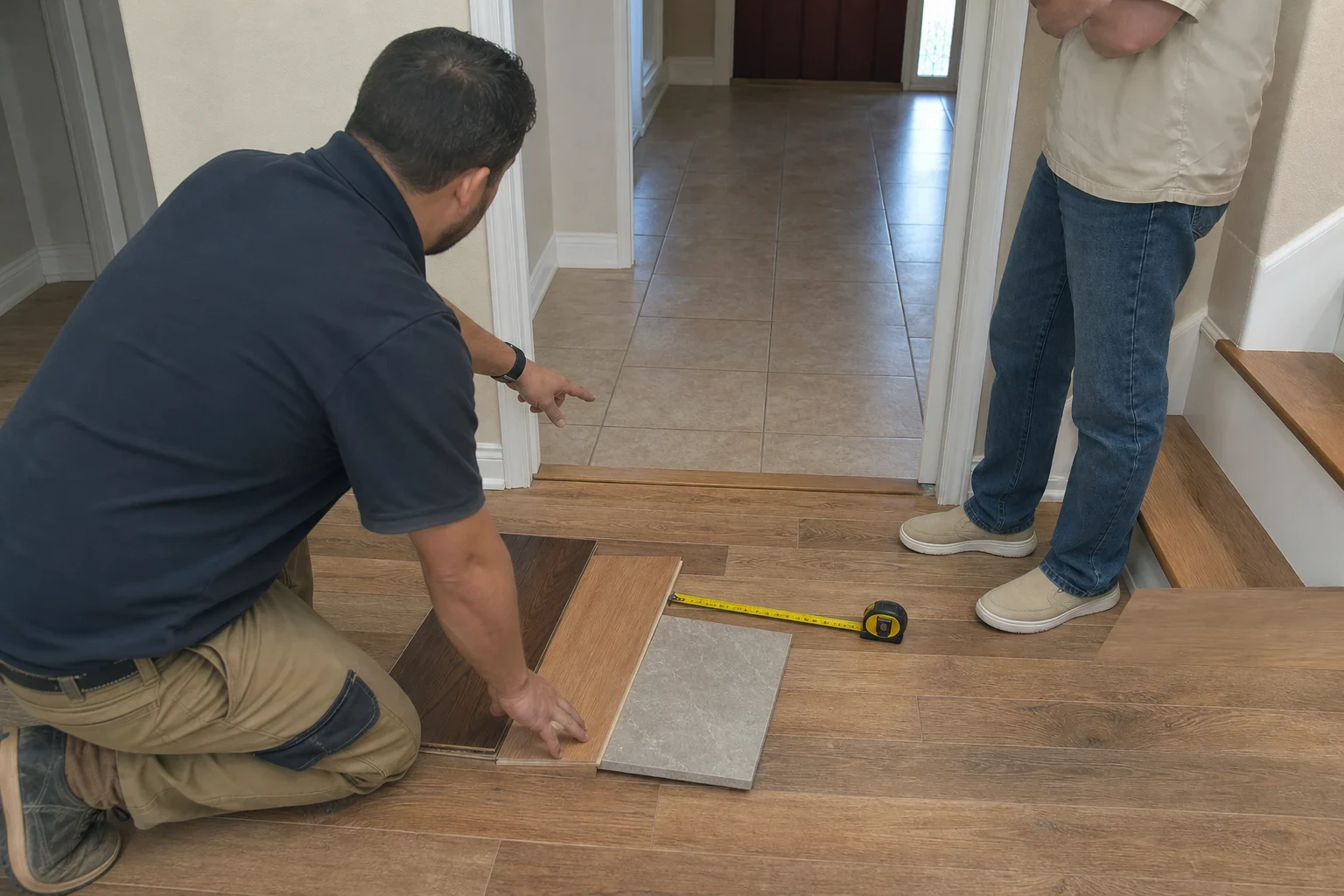
We look at the rooms, check the slab for cracks and flatness and ask how you use the space. You get your quote by phone or in person, with the prep work listed separately from the tile setting.
- 2
Demo and prep
Day one is usually removal, grinding and patching. We protect walls and cabinet faces and move what needs moving. We carry insurance for the work we do inside your home.
- 3
Setting the tile
We snap layout lines, set tile in mortar and use leveling clips on large formats to keep edges flush. Thinset needs time to cure before grout, typically about a day.
- 4
Grout, seal and clean up
We grout, wipe haze, caulk movement joints, seal grout or natural stone where needed and vacuum the work area. Light foot traffic is fine once grout has set, and we tell you when furniture can go back.
Tile Flooring Questions
Can you put new tile over my existing tile?
Sometimes, but rarely the best choice. It only works if the old tile is solidly attached, flat and not cracked, and it raises the floor height at doors, appliances and transitions. In most cases removing it and fixing whatever caused problems underneath gives a longer-lasting floor.
Should I use porcelain, ceramic or stone?
Porcelain is dense and absorbs very little water, so it suits bathrooms, kitchens and entries. Ceramic is softer and lighter, fine for low-traffic rooms. Natural stone looks distinctive but needs sealing and more care with acidic spills.
What kind of grout do you use?
For most floors we use a polymer-modified cementitious grout and seal it. Where stain resistance matters, such as kitchens or pet areas, urethane or epoxy grout is an option that needs no sealing. We will explain the tradeoffs for your room.
How long until we can walk on it?
Careful foot traffic is usually fine about a day after grouting. Heavy furniture and appliances should wait a little longer while the mortar and grout reach strength, and we will give you the timing for the products we used.
Is the installation warrantied?
Yes. We give a 1-year workmanship warranty on all installations, including tile. If a problem from our installation shows up in that time, call us and we will come back and look at it.
Plan a Tile Floor That Stays Put
Tell us which rooms, what is down now and the tile you have in mind. We will talk through prep, layout and timing so you know what the job involves before anything comes up.